
 Available in GB
Content
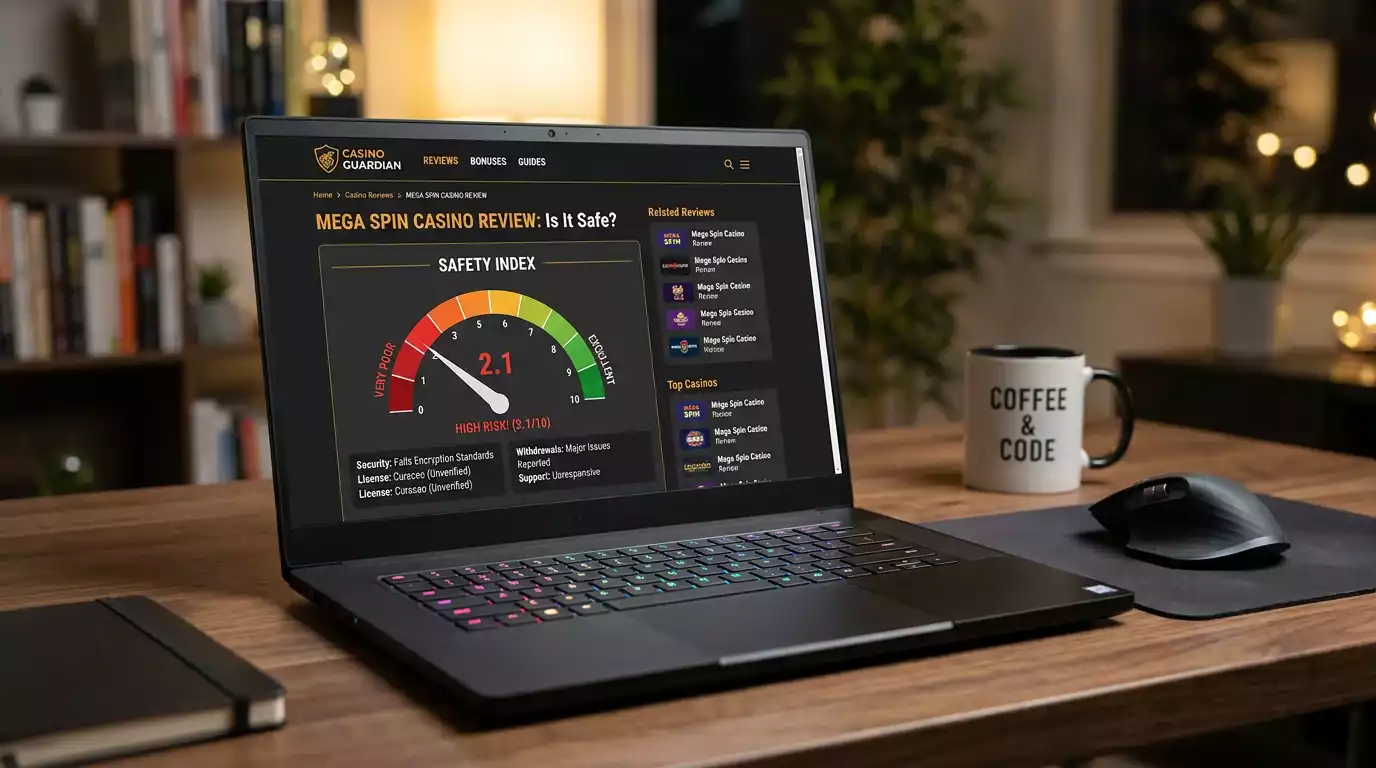
Safety Ratings: Why Systematic Ratings Matter More Than Stars
I stopped trusting star ratings for online casinos around year two of my compliance career. A five-star rating at one review site and a three-star rating at another for the same operator told me nothing useful — except that the rating systems were measuring different things, weighting them differently, and possibly influenced by commercial relationships. What changed my approach was discovering Casino.guru’s Safety Index, which does something most rating systems avoid: it publishes its methodology.
With thousands of casinos operating worldwide and the offshore unlicensed segment continuing to grow, having a systematic way to assess operator safety is no longer optional — it’s a basic research skill. The Safety Index isn’t perfect, and I’ll address its limitations. But it’s one of the few publicly available tools that applies consistent criteria across thousands of operators, and understanding how it works makes you a better evaluator of any casino, not just the ones it covers.
The full assessment is in our Rouge Casino review.
How the Safety Index Is Built: Factors and Weights
Casino.guru’s Safety Index produces a score between 0 and 10 for each casino in its database. The methodology combines quantitative data with qualitative assessment across several categories, each weighted to reflect its importance to player safety. The system is algorithmic at its base but includes manual adjustments for factors that automated scoring can’t capture.
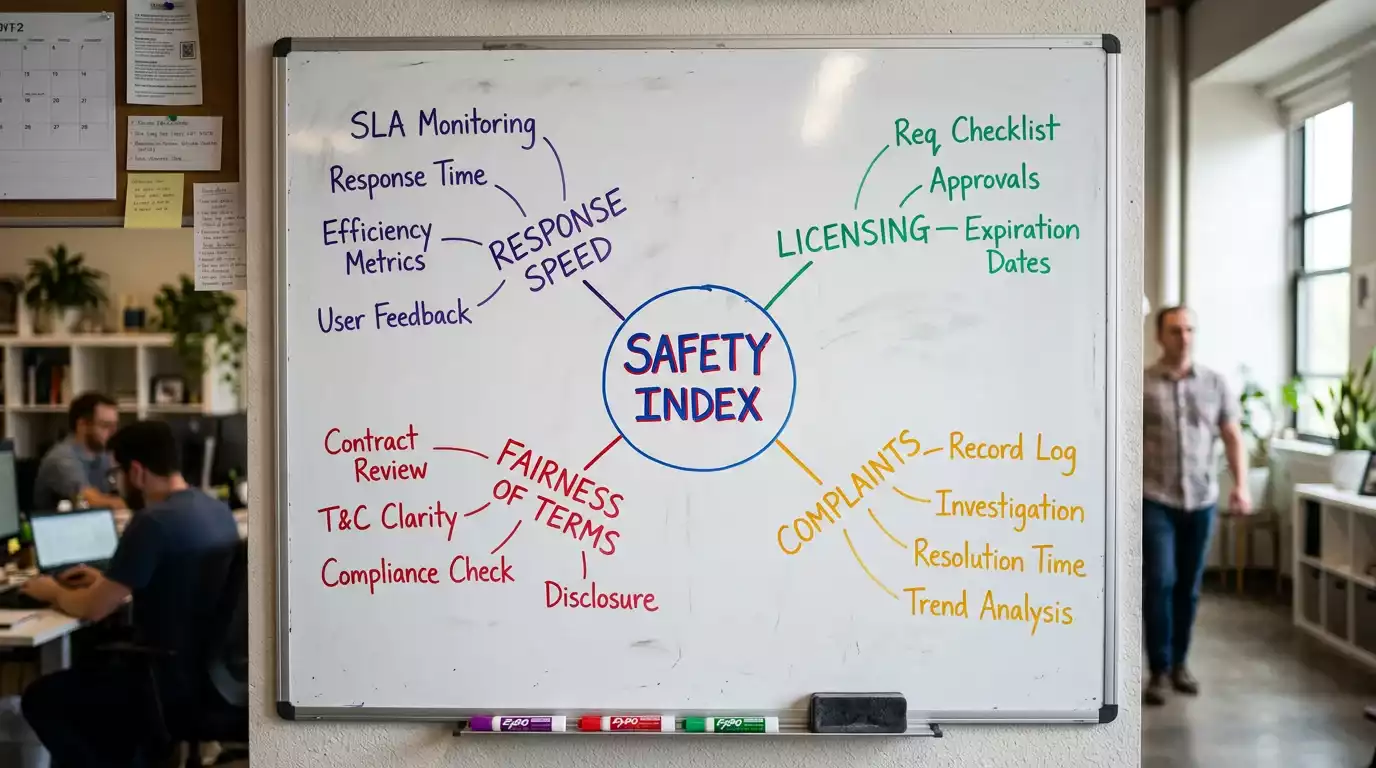
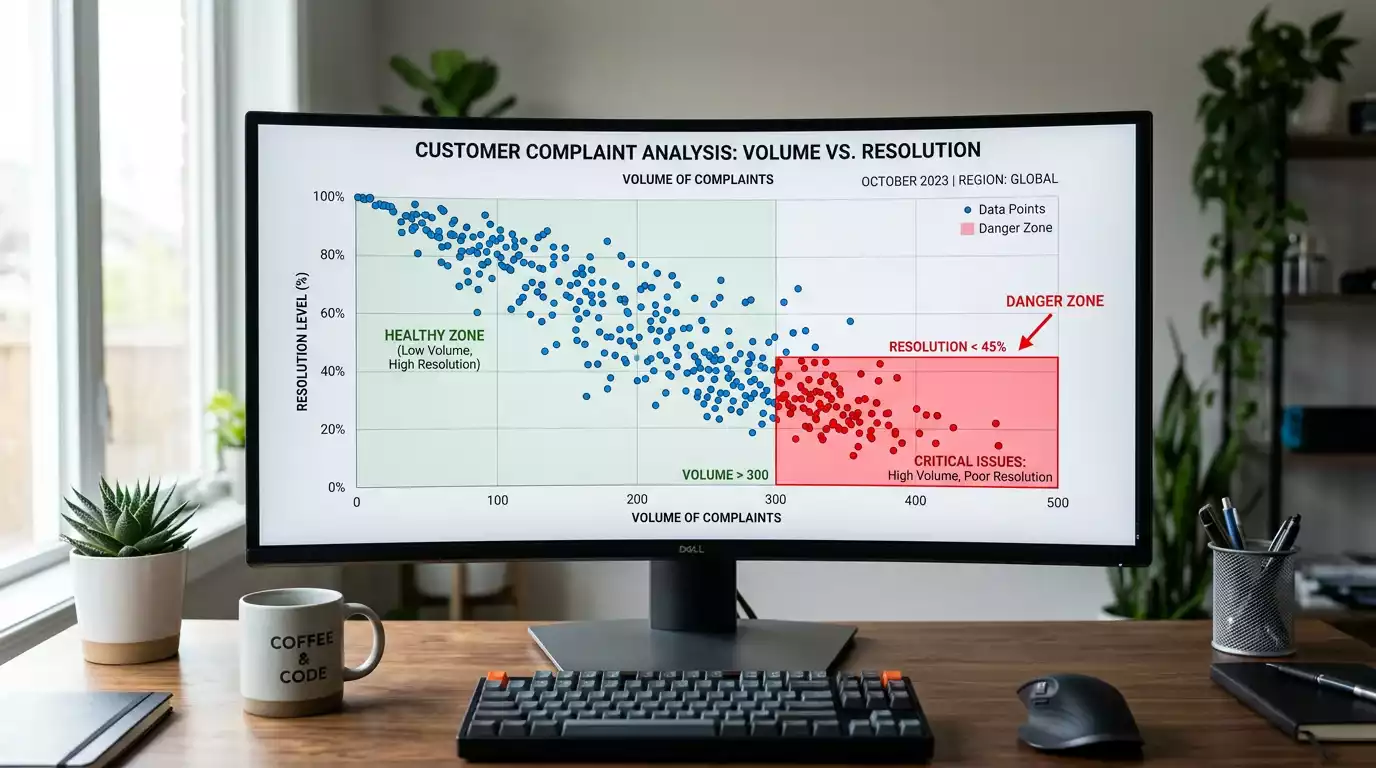
The primary factors include licensing jurisdiction, which establishes the regulatory baseline. A UKGC licence pulls the score upward; a Curaçao licence contributes less. The complaint history — both the volume and the resolution rate — is heavily weighted. An operator that receives complaints but resolves them scores better than an operator that receives fewer complaints but ignores them entirely. The “no reaction” response pattern, where an operator simply does not engage with player complaints, is treated as a significant negative signal.
Terms and conditions analysis forms another pillar. The Safety Index team reviews bonus terms, withdrawal policies, and account closure procedures for fairness. Predatory clauses — maximum win limits tied to bonuses, confiscation of winnings for minor terms violations, vague “general bonus abuse” justifications for account closures — drag the score down. Transparent, player-friendly terms push it up.
Revenue and longevity contribute a stabilising component. Larger, more established operators tend to score higher, not because size equals safety, but because operators that have been active for years have a longer track record to assess. A brand-new casino with no complaints isn’t necessarily safe — it just hasn’t been around long enough to accumulate evidence in either direction.
What makes the methodology valuable is its internal consistency. The same criteria, applied the same way, across every operator in the database. You can disagree with the weighting — and I do on certain factors — but you can’t accuse it of inconsistency, which is more than most star-rating systems can claim.
Rouge Casino’s 1.7 Score: What Each Factor Tells You
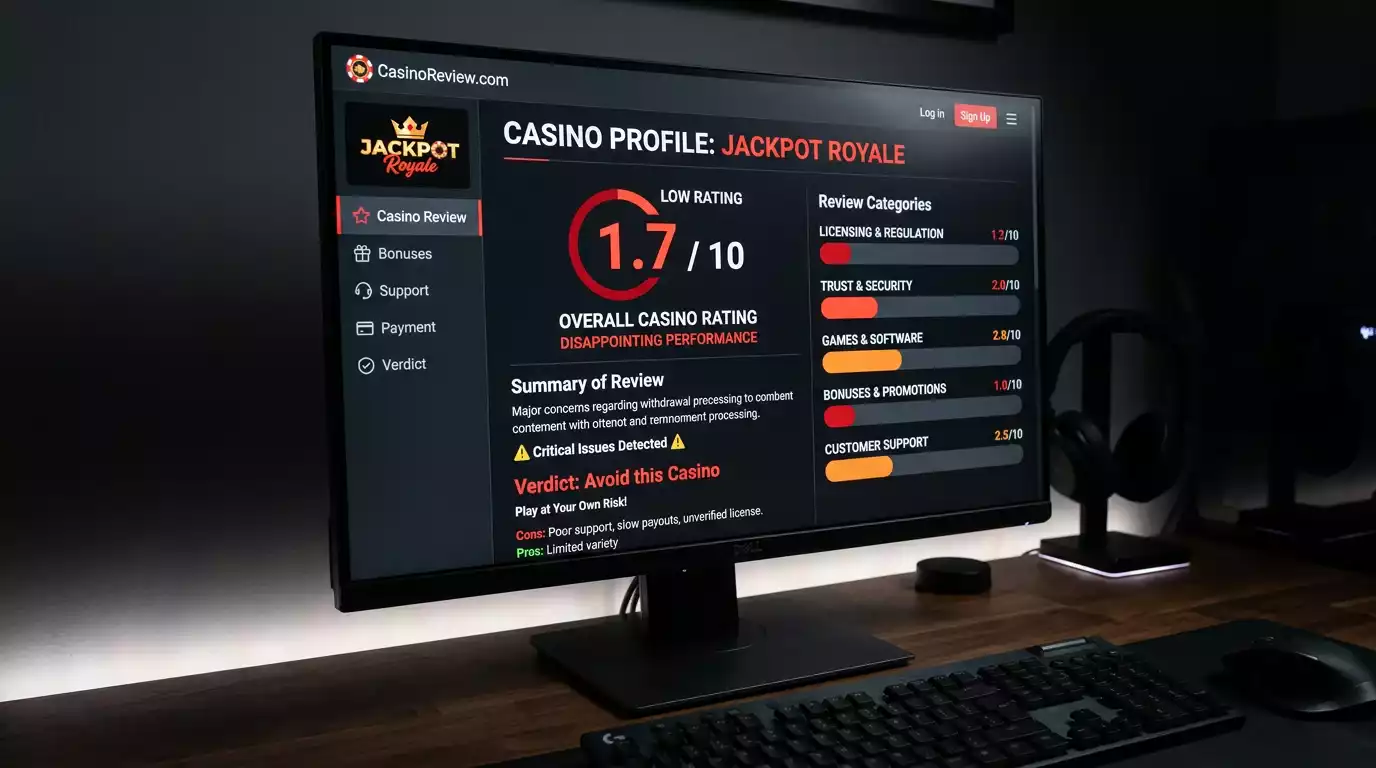
I pulled up Rouge Casino’s Safety Index page expecting a low score. A 1.7 out of 10 is lower than “low” — it sits in the range Casino.guru classifies as very low, indicating significant safety concerns across multiple categories. But the number alone isn’t useful. Understanding which factors dragged it there is what tells you something actionable.
The licensing component contributes minimally. Rouge Casino operates under a Curaçao licence, which the Safety Index weights lower than UKGC, MGA, or other Tier 1 jurisdictions. The licence exists, but it provides limited player protection infrastructure — no independent dispute resolution, minimal oversight of operator conduct, and no effective enforcement mechanism for player complaints. As I’ve noted elsewhere, 43% of fraudulent online casinos display fake licensing information, and the Safety Index team verifies licence claims rather than taking them at face value.
The complaint history is where the score takes its most significant hit. Rouge Casino has accumulated a pattern of unresolved complaints — primarily around withdrawal refusals and account restrictions. The Safety Index tracks not just the number of complaints but the operator’s engagement with its resolution process. An operator that responds to complaints, provides evidence, and works toward resolution receives credit for that engagement even if the complaint isn’t resolved in the player’s favour. An operator that doesn’t respond at all — the “no reaction” pattern — receives no such credit. Rouge Casino’s complaint resolution profile falls into the latter category more often than the former.
The terms and conditions assessment reflects what I’ve documented in separate analyses of Rouge Casino’s bonus structure: high wagering requirements, maximum win caps, and clauses that give the operator broad discretion to void winnings. These are not unusual for Curaçao-licensed operators, but the Safety Index penalises them regardless of how common they are in any particular licensing jurisdiction.
How Rouge Casino scores in practice: the complaints record.
How to Use Systematic Ratings in Your Research
A single rating system — however well-constructed — should never be your only source of information. I use the Safety Index as a screening tool, not a decision-making tool. It tells me where to focus my attention and what to investigate further, but it doesn’t replace the investigation itself.
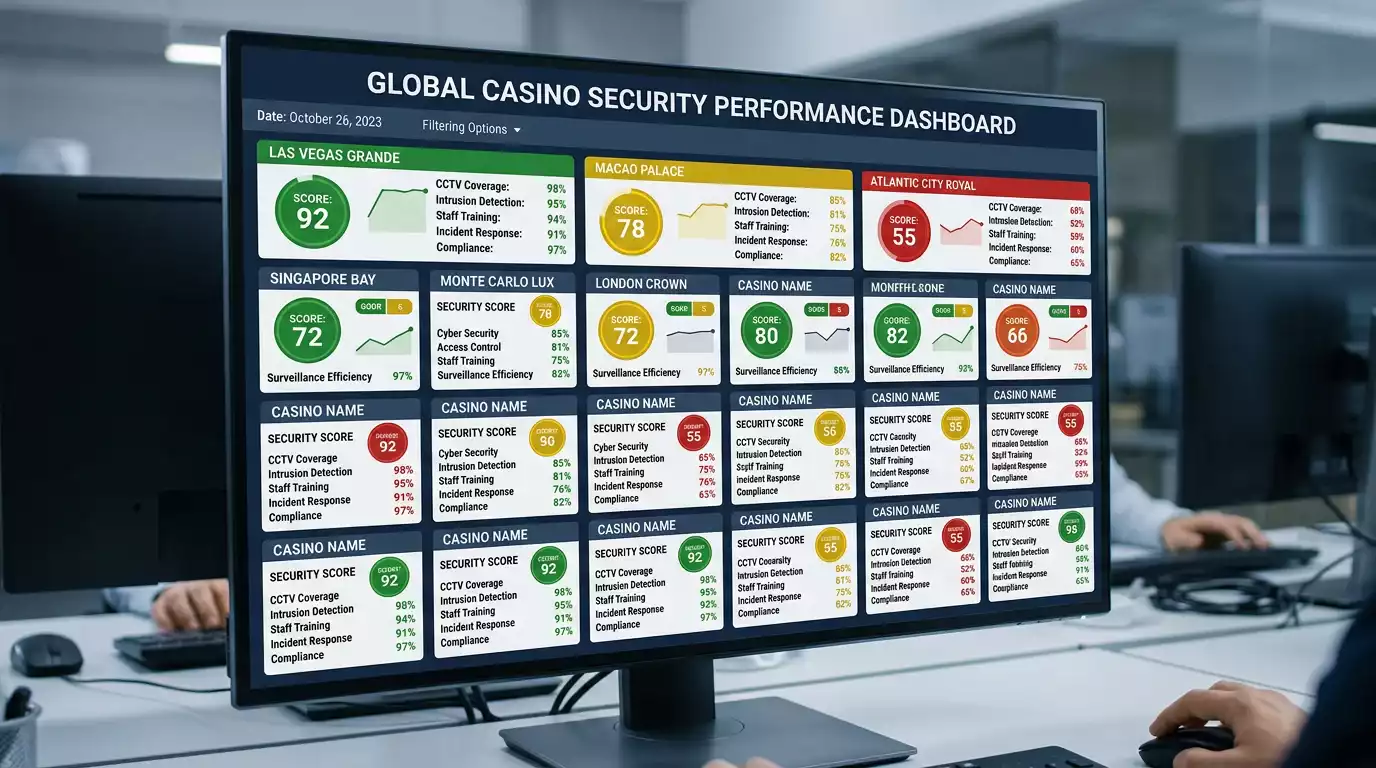

Start with the score as a filter. Operators scoring below 3.0 on the Safety Index warrant extreme caution — the combination of factors needed to produce a score that low typically indicates systemic issues rather than isolated problems. Operators scoring above 7.0 have generally demonstrated consistent regulatory compliance, fair terms, and responsive complaint handling. The middle range — 3.0 to 7.0 — requires the most judgement, because a mid-range score can reflect very different combinations of strengths and weaknesses.
Then go beyond the score. Read the individual complaint summaries. Check the operator’s response pattern. Look at whether complaints cluster around specific issues — withdrawal delays, bonus disputes, account closures — or spread across multiple categories. A casino with ten complaints about slow withdrawals is telling a different story than a casino with ten complaints spread across withdrawals, game fairness, account security, and currency conversion.
Cross-reference with other sources. Trustpilot reviews, player forum threads, and regulatory action databases all add context that a single algorithmic score cannot capture. The Safety Index is one lens. The most accurate picture comes from combining multiple lenses and looking for the patterns they share. When the Safety Index, Trustpilot reviews, and forum reports all point in the same direction, that convergence is stronger evidence than any single source alone.
No methodology eliminates risk entirely. What a systematic approach does is make risk visible — and visible risk is manageable in a way that invisible risk is not.
Is the Safety Index score updated when new complaints arrive?
Yes. Casino.guru updates Safety Index scores as new complaints are filed and resolved. An operator’s score can rise if it begins responding to and resolving complaints, or fall if new unresolved complaints accumulate. The score reflects a rolling assessment rather than a fixed point-in-time rating, which means it tracks operator behaviour changes over time.
What score is considered safe enough to deposit at?
Casino.guru classifies scores above 7.5 as indicating a good safety level, while scores below 3.0 indicate very low safety. There is no universally agreed threshold, and individual risk tolerance varies. As a compliance analyst, I would not deposit at any operator scoring below 5.0 without first conducting extensive independent research into its licensing, complaint history, and financial stability.