
 Available in GB
Content
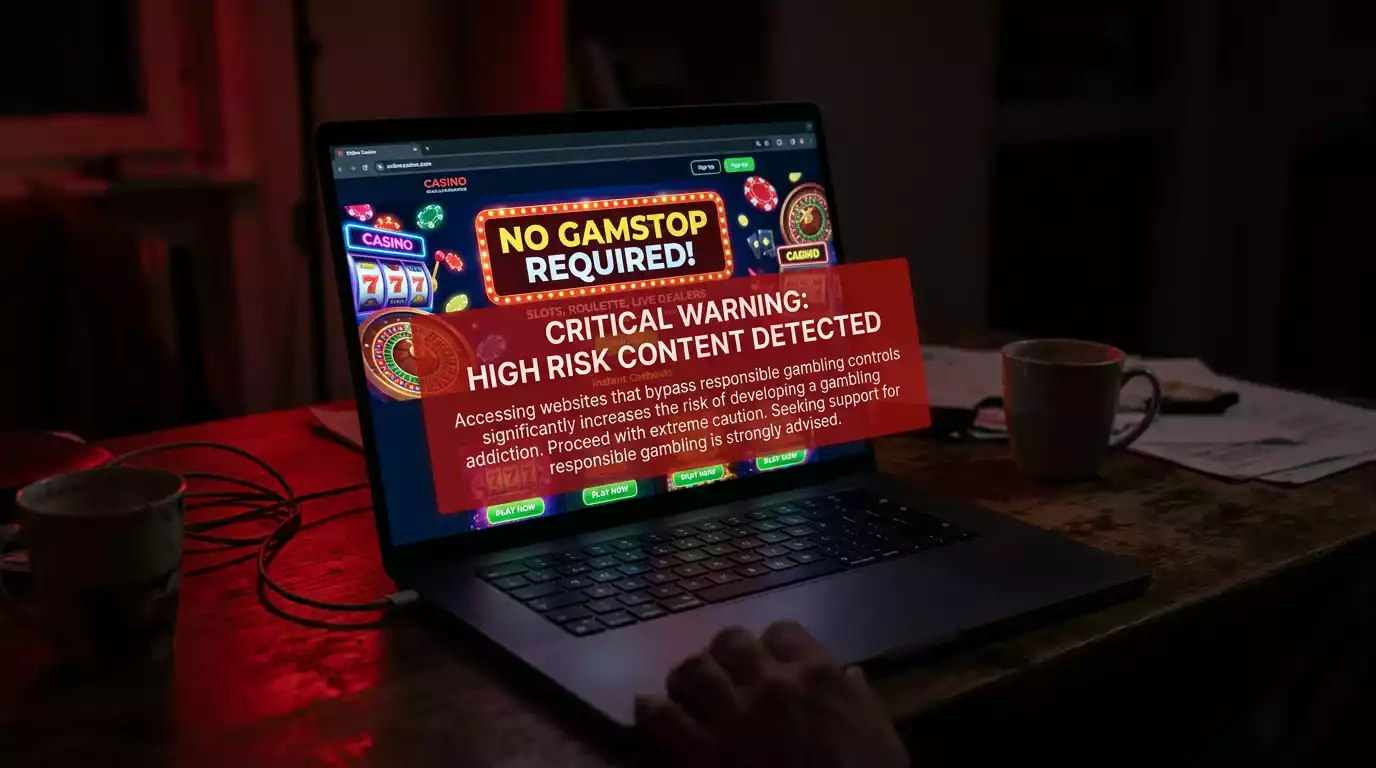
The first time I came across the phrase “not on GamStop” used as a marketing slogan, I had to re-read it twice. GamStop is a self-exclusion tool designed to help people step back from gambling when they recognise a problem. Advertising that your casino sits outside that tool is, quite literally, marketing to people who have asked for help stopping. That is the business model, and understanding it matters more than any technical analysis of payment methods or bonus structures.
The full assessment is in our Rouge Casino review.
How Non-GamStop Casinos Operate and Target UK Players
The operational structure is straightforward. An operator obtains a licence in a jurisdiction outside the UK — most commonly Curaçao, though some use licences from Anjouan, Kahnawake, or operate with no recognisable licence at all. The operator builds a casino site with English-language content, GBP currency support, UK-friendly payment methods, and marketing copy that explicitly addresses UK players. The site does not hold a UKGC licence, is not part of the GamStop register, and does not comply with UK gambling regulations.
The targeting is deliberate and measurable. Search engine advertising, affiliate marketing, and social media promotion for non-GamStop casinos overwhelmingly use UK-focused keywords and messaging. Phrases like “casino not on GamStop UK,” “play without GamStop,” and “UK casino no GamStop” are not accidental keyword choices. They are acquisition strategies designed to capture traffic from players who have self-excluded from regulated sites and are searching for alternatives. The affiliate ecosystem around these sites is substantial — eight of the top ten search results for “rouge casino” are affiliate review sites promoting non-GamStop operators.
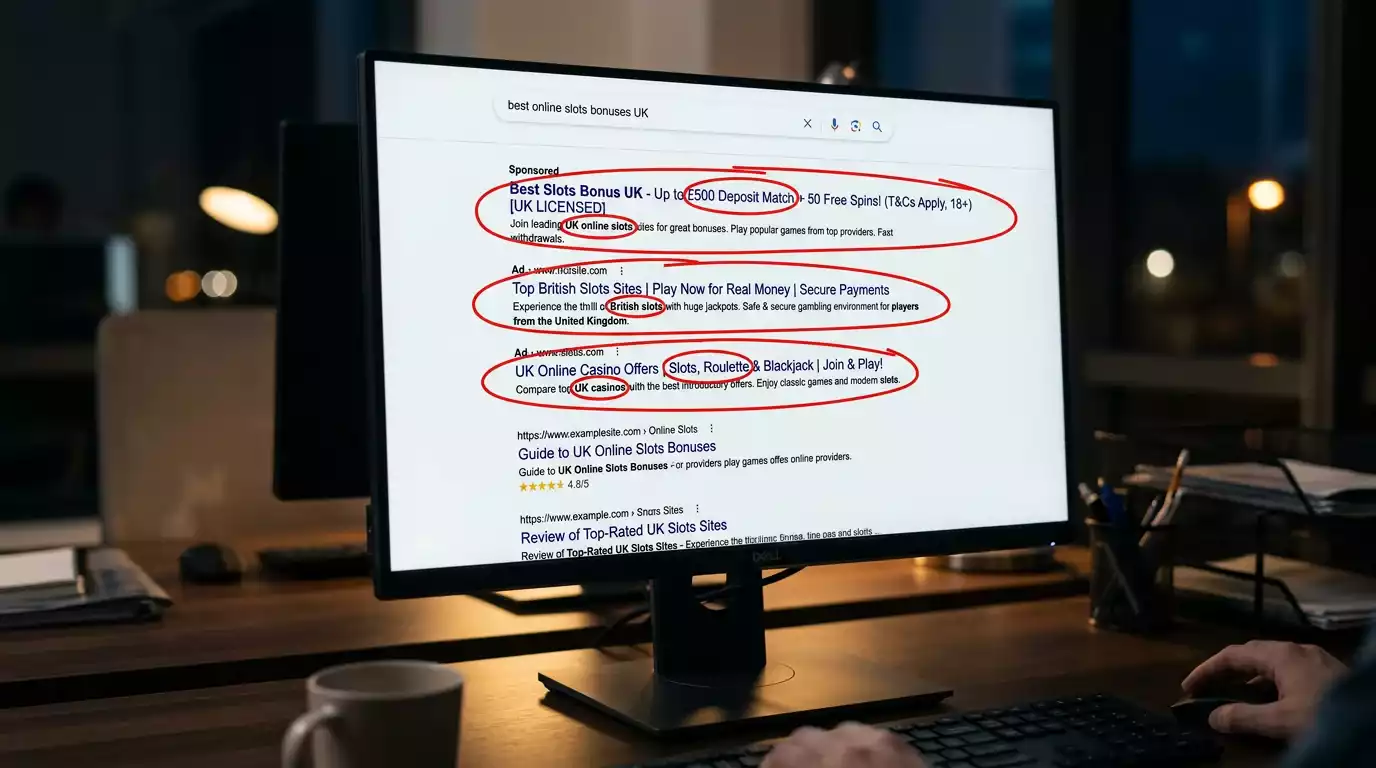
The revenue model works because self-excluded players represent a known demand signal. These are people who gambled enough to recognise a problem and take action. Their playing history, deposit patterns, and game preferences are established. They are not casual players experimenting with a £10 deposit — they are experienced users who, in many cases, were high-value customers at regulated sites. The non-GamStop market exists because serving these players is profitable, and because the regulatory tools to prevent it have jurisdictional limits.
Our top casino picks for the UK
- x3betBonus: Welcome Pack 100% Up to £1.000 + 200 Free Spins · Payout speed: 1-3 business days
- SpinFormulaBonus: 550% Up To £15,000 + 550 FS · Payout speed: 1-3 business days
- Revery PlayBonus: 100% up to€1,000+ 100 FS · Payout speed: 1-3 business days
- AmunbetBonus: Join now and get 450% up to 2,700 GBP + 450 FS · Payout speed: 1-3 business days
- SlotoSportBonus: 500% up to £ 10 200+ 777 FS · Payout speed: 1-3 business days
- NightLuckBonus: Welcome Pack + 805% Up To 6400€ + 280 FS · Payout speed: 1-3 business days
- EvoSpinBonus: 125% up to €2500 + 125 Free Spins · Payout speed: 1-3 business days
Safety Trade-Offs: What You Give Up
I could list the missing protections in a paragraph, but the cumulative weight matters. At a non-GamStop casino, there is no UKGC oversight. No mandatory segregation of player funds. No affordability checks at any deposit threshold. No stake limits on online slots — the £5 cap (effective 9 April 2025 for 25+) and £2 cap (effective 21 May 2025 for 18-24) at UKGC sites do not apply. No integration with GamStop’s self-exclusion register, by definition. No access to IBAS or other approved ADR providers for dispute resolution. No mandatory responsible gambling tools — no deposit limits, no session timers, no reality checks unless the operator voluntarily implements them.
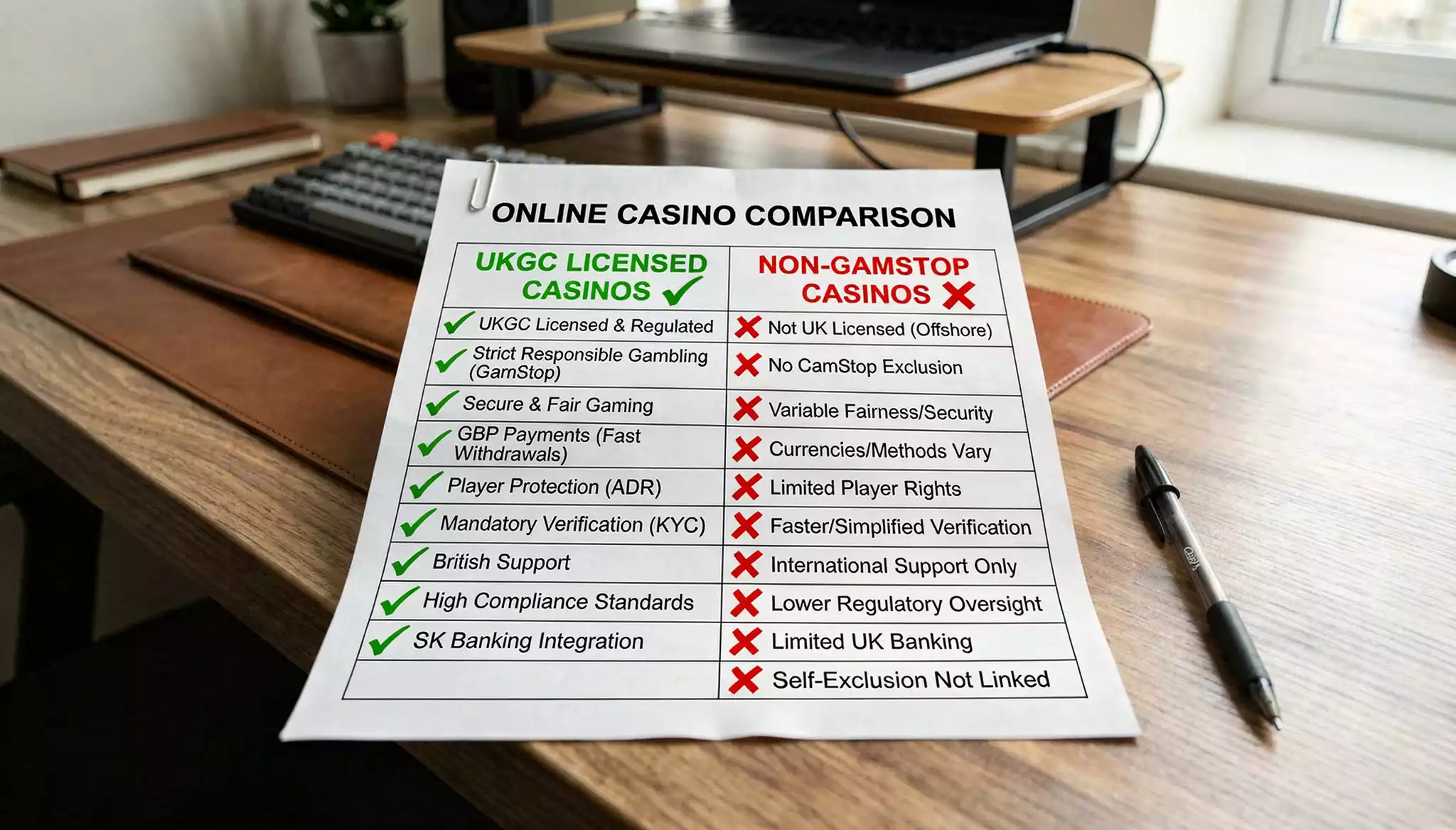
UKGC licensing and Curaçao licensing impose materially different player-protection obligations. That gap translates into concrete differences in how disputes are resolved, how funds are protected, and how player welfare is monitored. At a UKGC-licensed site, a player who files a complaint through IBAS receives a binding adjudication. At a Curaçao-licensed site, a player whose complaint is ignored has no equivalent escalation path. The UKGC issued 741 cease-and-desist notices and reported nearly 398,000 illegal URLs to search engines between 2025 and 2026 — but the offshore operators targeted by these actions frequently reappear under new domains within weeks.
The Affiliate Ecosystem Promoting Offshore Play
Something I find striking after eight years in compliance work: the affiliate sites promoting non-GamStop casinos often look more professional than the casinos they promote. Polished design, detailed review formats, comparison tables, and editorial content that mimics the tone of independent journalism. What they rarely disclose prominently is that every “review” is monetised through referral commissions paid by the operators.

The conflict of interest is structural. An affiliate site earns revenue when a player clicks through and deposits at the casino being reviewed. The more players deposit, the more the affiliate earns. This creates a financial incentive to present offshore casinos in the most favourable light possible — to emphasise bonuses, game variety, and the absence of regulatory “friction” while downplaying or omitting the safety trade-offs. The result is a search landscape where the dominant voices reviewing non-GamStop casinos are financially dependent on those casinos’ success.
I am not suggesting every affiliate reviewer is dishonest. Some produce genuinely informative content and include appropriate caveats. But the economic model creates a systematic bias that readers should account for. When eight of the top ten results for a casino search are affiliate reviews, the information environment is not neutral — it is commercially shaped in favour of the operator.
Where a UK player legally stands: the legal status.
Problem Gambling Data and the Non-GamStop Gap
Approximately 1.4 million British adults — 2.7% of the adult population per the Gambling Survey for Great Britain Year 2 (October 2025) — experience problem gambling. GamStop has registered over 600,000 self-exclusions, with monthly sign-ups breaking 10,000 for the first time in 2025. The GamStop Group has described this as unprecedented growth indicating a widespread need for self-exclusion tools and the crucial role of gambling harm prevention.
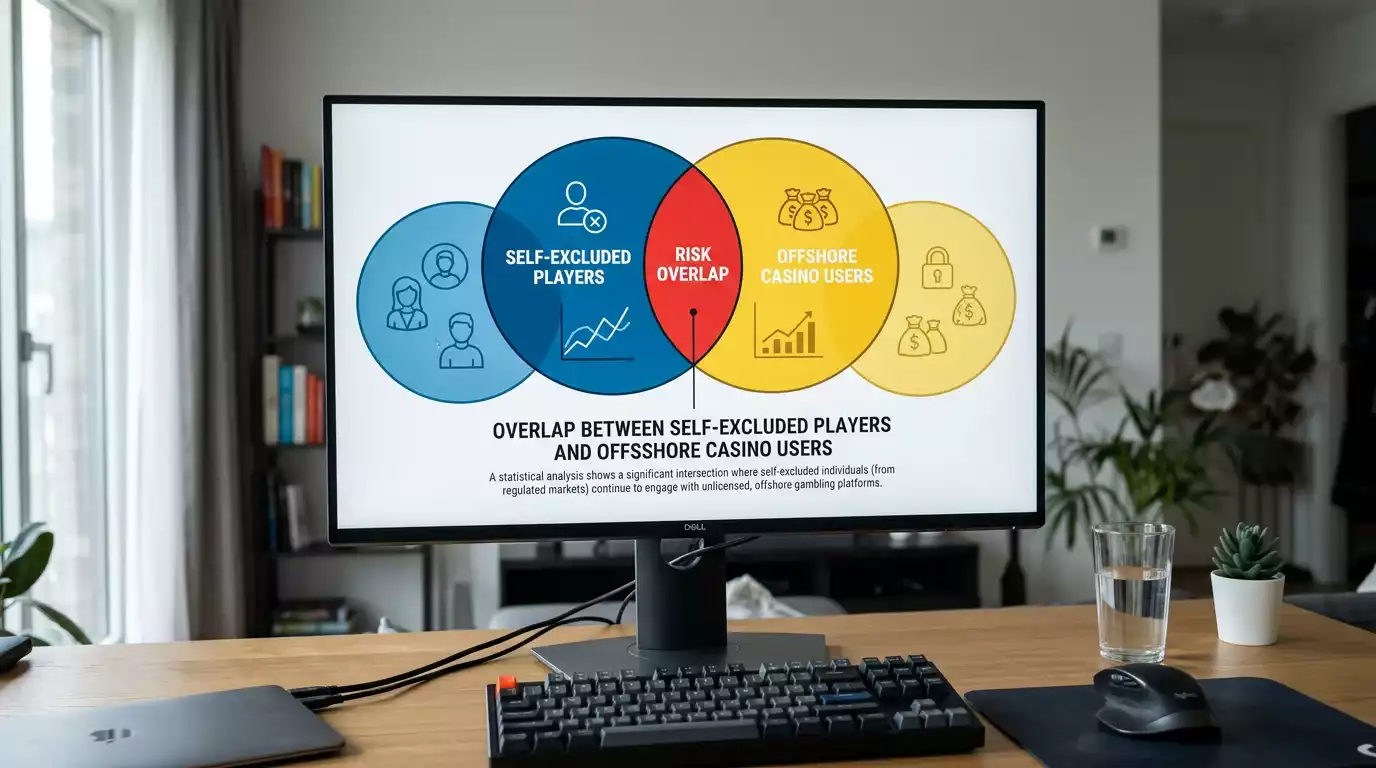
The non-GamStop market sits in the gap between that need and the tools available to meet it. GamStop works within its regulatory perimeter — every UKGC-licensed operator checks the register and blocks excluded players. But the perimeter has a boundary, and non-GamStop casinos exist precisely on the other side of it. Every player who self-excludes through GamStop but continues gambling at an offshore site represents a case where the self-exclusion system achieved its technical objective (blocking UKGC-licensed access) but not its actual purpose (helping the player stop).

The 44% year-on-year surge in GamStop registrations from players aged 16-24 makes this gap more urgent. Young players are more likely to be digitally fluent, more likely to discover offshore alternatives through social media and search, and more likely to navigate around a system they perceive as restrictive rather than protective. The protections exist. The question is whether the infrastructure preventing circumvention can keep pace with the demand to circumvent it — and the current evidence, with affiliate sites ranking prominently for every non-GamStop search query, suggests it cannot.
Are non-GamStop casinos legal for UK residents?
UK residents are not currently prosecuted for using offshore casinos. The legal liability falls on the operator, not the player — it is the operator who is required to hold a UKGC licence to offer gambling services to UK consumers. However, using a non-GamStop casino means gambling without the protections that UK regulation provides, including fund segregation, dispute resolution, affordability checks, and self-exclusion coverage.
Do non-GamStop casinos offer responsible gambling tools?
Some non-GamStop casinos offer voluntary responsible gambling features such as deposit limits or session reminders, but these are not mandatory and their implementation is inconsistent. There is no regulatory requirement for Curaçao-licensed or unlicensed operators to provide tools equivalent to those mandated at UKGC-licensed sites. Critically, non-GamStop casinos do not integrate with the GamStop self-exclusion register, which is their defining characteristic.