
 Available in GB
Content

Blockchain in Gambling: Promise vs Reality
At a conference in 2023, I watched a blockchain casino founder claim on stage that his platform had “solved fairness” in online gambling. The audience — mostly iGaming operators — responded with polite scepticism. Three years later, the crypto gambling market has reached an estimated $81 billion, blockchain-based casinos have proliferated, and that central claim — that the technology itself guarantees fair play — still circulates in marketing materials with remarkable persistence.
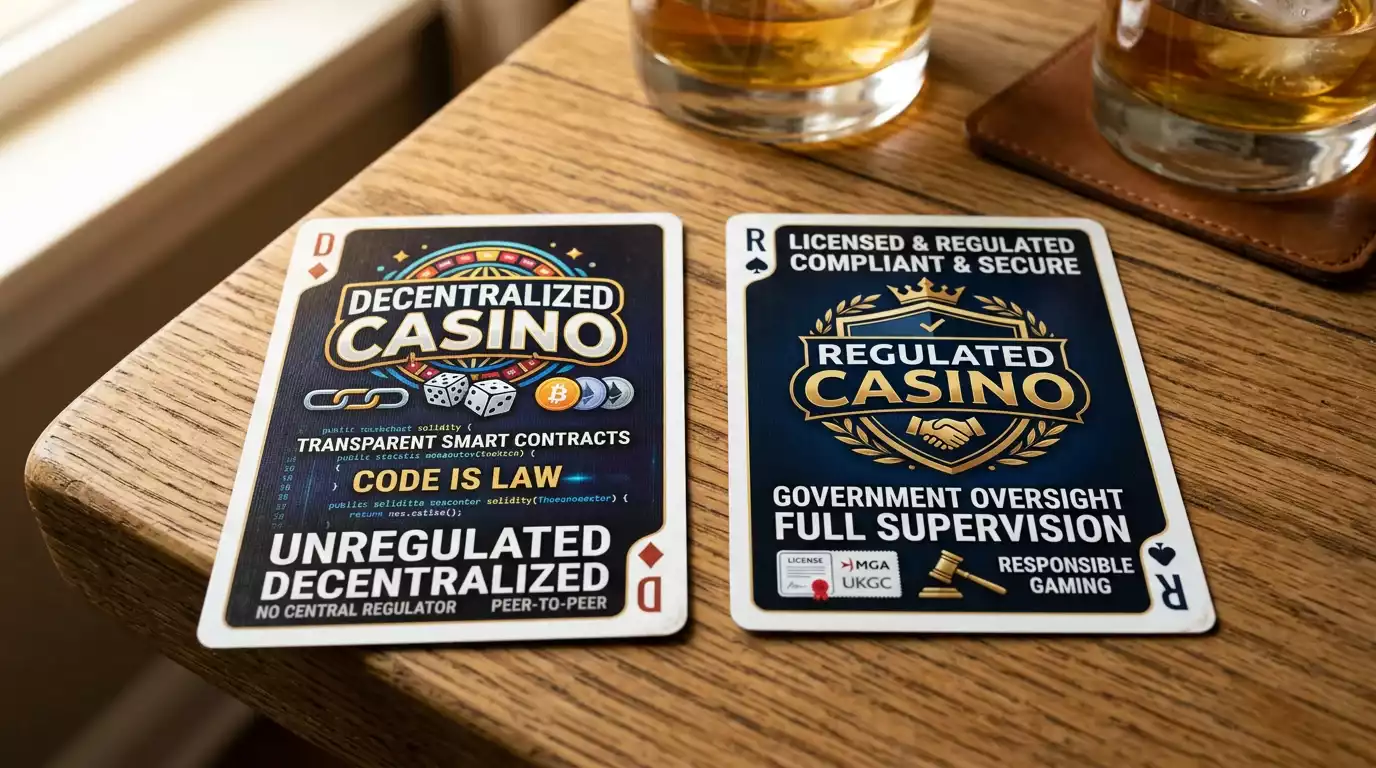
As a compliance analyst, I’m interested in what blockchain technology actually does for game fairness versus what its advocates say it does. The gap between those two things is where players get misled. Blockchain introduces genuine innovations in transparency — provably fair algorithms being the most significant — but it does not replace regulation, does not eliminate operator misconduct, and does not protect players from the most common harms associated with online gambling. Understanding what the technology can and cannot do is essential before accepting any platform’s fairness claims at face value.
The full assessment is in our Rouge Casino review.
How Provably Fair Technology Works
If you’ve spent any time on blockchain casino sites, you’ve seen the phrase “provably fair” — usually in large text, usually near a shield icon. The concept behind it is genuinely clever, and worth understanding properly before assessing its limitations.

In a traditional online casino, the outcome of each game round is determined by a random number generator running on the operator’s server. You, as the player, have no way to verify that the RNG is producing genuinely random results or that the operator hasn’t tampered with the output. You trust the operator, or you trust the regulator that audits the operator. That’s the entire trust model.
Provably fair systems work differently. Before each game round, the server generates a seed — a string of characters that will determine the outcome — and shares a cryptographic hash of that seed with the player. A hash is a one-way function: you can verify that a specific input produces a specific hash, but you cannot reverse-engineer the input from the hash. The player also contributes their own seed, which combines with the server seed to produce the final result. After the round, the server reveals the original seed. The player can then verify, independently and without trusting anyone, that the revealed seed matches the pre-committed hash and that the outcome was correctly derived from the combined seeds.
This is a genuine improvement in game-level transparency. It means the operator cannot change the outcome after seeing the player’s bet, and the player can cryptographically verify every single result. No traditional casino — online or land-based — offers this level of per-round verifiability. In theory, a provably fair casino cannot rig individual game outcomes without the tampering being detectable.
60% Fraud Reduction: What the Data Covers
Industry research reports that blockchain technology reduced fraud in crypto casinos by 60% compared to traditional online casinos. That’s a striking figure, and it deserves more scrutiny than it typically receives in the marketing materials that cite it.
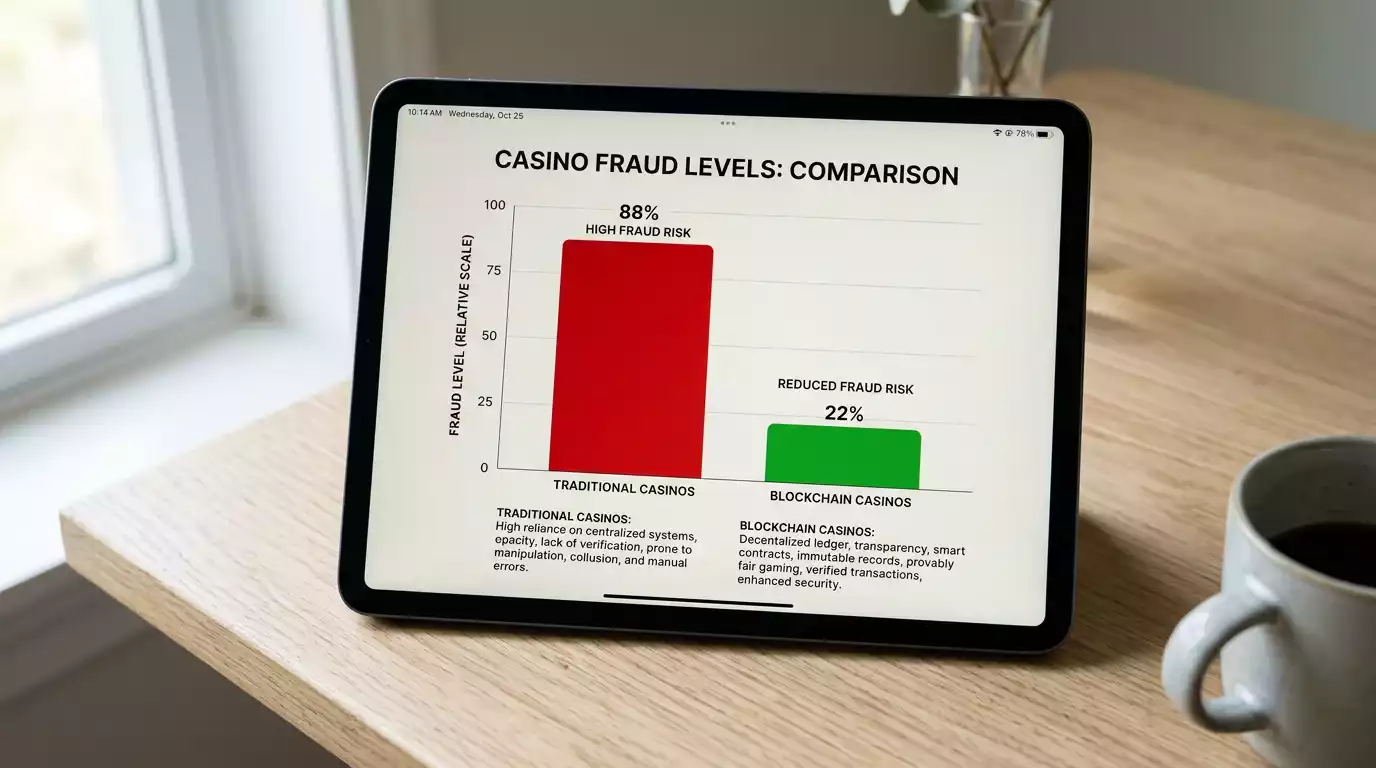
The 60% reduction refers primarily to specific categories of fraud that blockchain’s transparency mechanisms are designed to address: outcome manipulation, deposit theft through fake platforms, and payment processing fraud. In these categories, the reduction is plausible. Provably fair algorithms make outcome manipulation detectable. On-chain transaction records make deposit theft traceable. Smart contract-based payouts remove the payment processor as a potential fraud vector.

What the 60% figure does not cover — and what most citations fail to note — is the full spectrum of risks that online gambling players face. The statistic measures fraud reduction, not harm reduction. A blockchain casino with provably fair games can still set predatory wagering requirements, impose unreasonable withdrawal limits, refuse payouts on spurious grounds, target vulnerable players, and operate without any responsible gambling tools. None of these practices constitute “fraud” in the narrow technical sense, and none are prevented by blockchain technology.
The distinction matters because the most common player complaints about online casinos — withdrawal delays, confiscated winnings, locked accounts — are not technical fraud problems. They are operator behaviour problems. A casino that refuses to pay your withdrawal is not committing the kind of fraud that blockchain detects. It’s exercising discretion that its terms allow, in an environment where no regulator compels it to act differently. The provably fair algorithm verified that you won. The operator just decided not to pay.
Whether the games themselves are fair: RTP and fairness.
What Blockchain Can’t Fix: Regulation, KYC, Disputes
I once reviewed a player complaint against a blockchain casino where every game outcome was provably fair, the player had won £4,000, and the operator refused to process the withdrawal. The casino’s terms contained a clause allowing it to void winnings if the player was suspected of “strategic play” — a term defined so broadly it could apply to anyone who won consistently. The blockchain verified every bet, every outcome, every winning spin. And it was completely irrelevant to the dispute, because the dispute wasn’t about whether the games were fair. It was about whether the operator would honour its obligations.
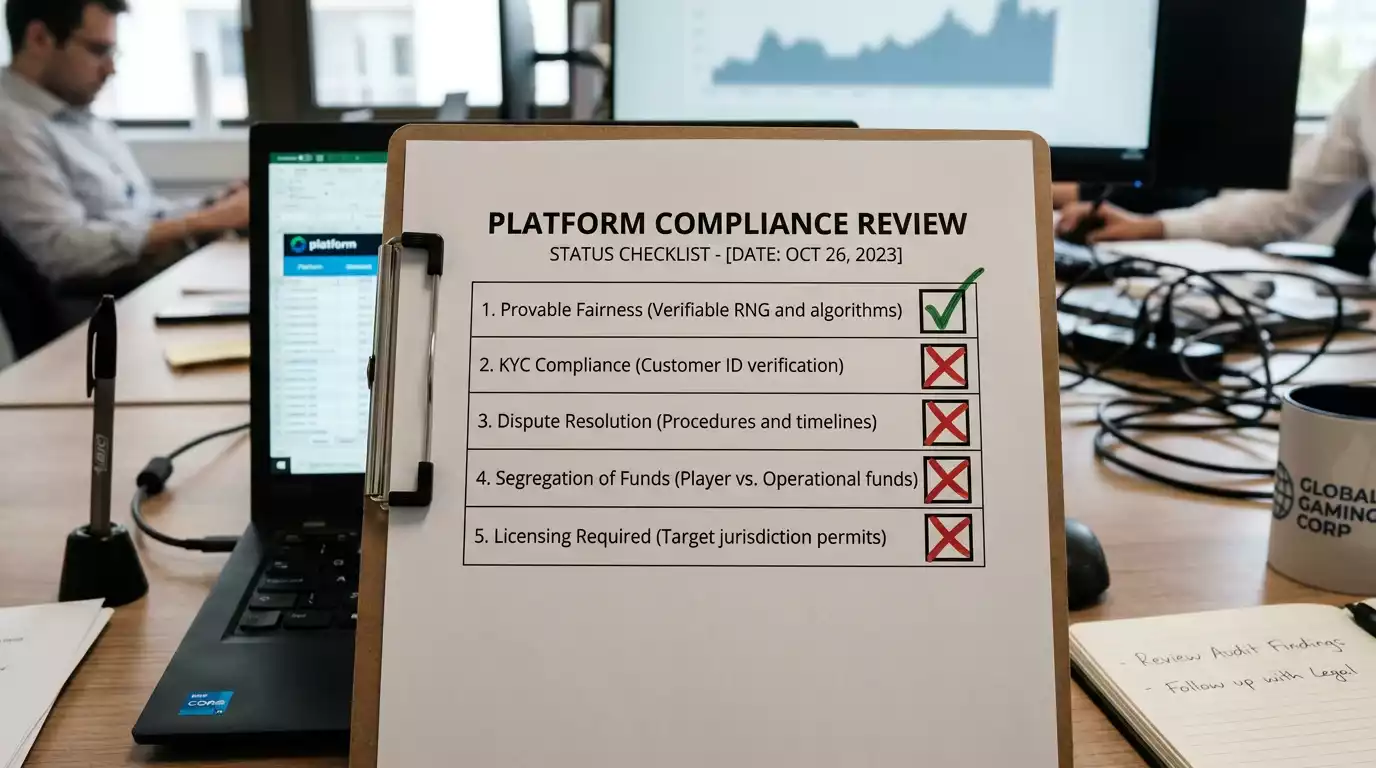
This is the fundamental limitation of blockchain in gambling: it solves a transparency problem but not a trust problem. Transparency in game outcomes is valuable, but it’s a small part of the overall trust relationship between player and operator. The much larger components — will the operator pay my winnings, will it honour its bonus terms, will it protect my data, will it intervene if my gambling becomes harmful — are all governance questions that technology alone cannot answer.
KYC (Know Your Customer) verification is another area where blockchain’s strengths become weaknesses. Many crypto casinos market the absence of KYC as a feature — sign up with just a wallet address, no identity documents required. For players who value privacy, this is appealing. For regulators, it’s alarming. KYC exists to prevent money laundering, underage gambling, and self-excluded players from circumventing their exclusions. A casino without KYC is a casino that cannot verify whether its players are old enough to gamble, whether they’ve self-excluded, or whether the funds being wagered are legitimate.
Dispute resolution is perhaps the starkest gap. At a UKGC-licensed casino, unresolved complaints can be escalated to an approved Alternative Dispute Resolution provider with binding authority. At a blockchain casino with no licence and no regulatory obligation, the player’s only recourse is the operator’s own complaint process — which the operator controls entirely. The blockchain’s immutable record of bets and outcomes is useful evidence, but evidence without a forum to present it in is just data.
Blockchain technology makes online gambling more transparent. It does not make it safer. That distinction is the difference between a technology improvement and a player protection framework — and confusing the two benefits the operator, not the player.
Does provably fair mean the casino can’t cheat?
Provably fair technology prevents the casino from manipulating individual game outcomes after a bet is placed, and allows players to verify each result cryptographically. However, it does not prevent other forms of misconduct: predatory bonus terms, withdrawal refusals, account closures, or the absence of responsible gambling protections. A provably fair casino can still treat players unfairly in every way that doesn’t involve rigging specific game results.
Can blockchain casinos operate without a gambling licence?
Many do, but legality depends on jurisdiction. Most blockchain casinos operate from jurisdictions with minimal or no gambling regulation. They are not licensed by bodies like the UKGC or MGA, which means they are not subject to player protection requirements, dispute resolution obligations, or responsible gambling mandates. Operating without a licence is not illegal in the casino’s home jurisdiction, but providing services to UK players without a UKGC licence is an offence under the Gambling Act 2005.