
 Available in GB
Content
- The Curaçao Licensing Framework: Structure and Limitations
- UKGC Licensing: What UK Players Normally Get
- MGA: The Middle Ground Between Curaçao and UKGC
- Three Licences Side by Side: Enforcement, Disputes, Penalties
- Rouge Casino's Licence Claims: Verified vs Stated
- What This Means for Your Money and Your Rights
- Frequently Asked Questions
- Related guides in this section
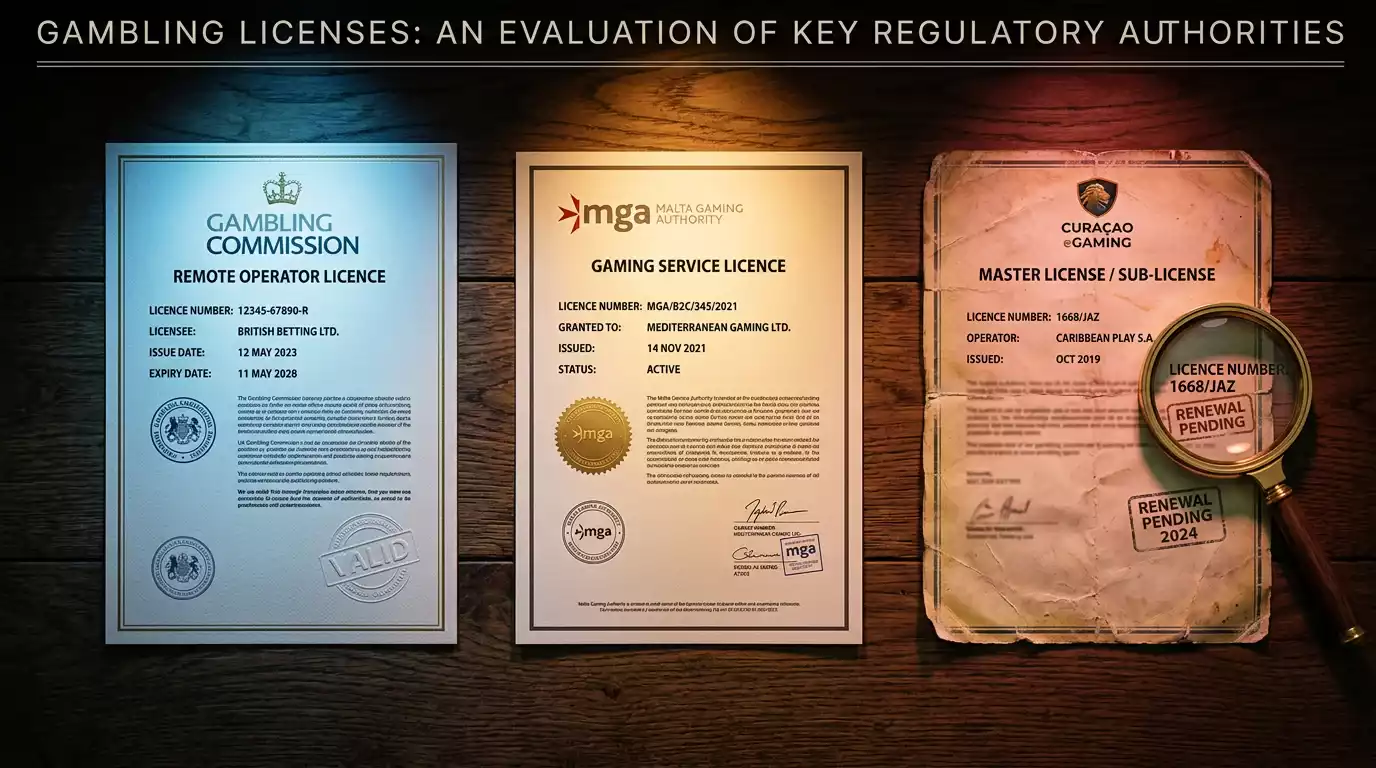
Three years ago, I sat across from a Curaçao-based operator at an iGaming conference in Amsterdam. He told me, with a straight face, that his licence offered “the same protections as the UKGC.” I nearly choked on my coffee. That conversation is the reason I started documenting exactly what each gambling licence does — and more importantly, what it does not do — for players who are about to deposit real money.
Rouge Casino holds a Curaçao licence. That single fact shapes everything about your experience as a UK player: how your complaints are handled, whether your funds are segregated, what happens if the operator simply refuses to pay. The gap between a Curaçao permit and a UKGC licence is not a matter of bureaucratic preference. It is a gap measured in enforcement actions, financial penalties, and player compensation — or the total absence of all three.
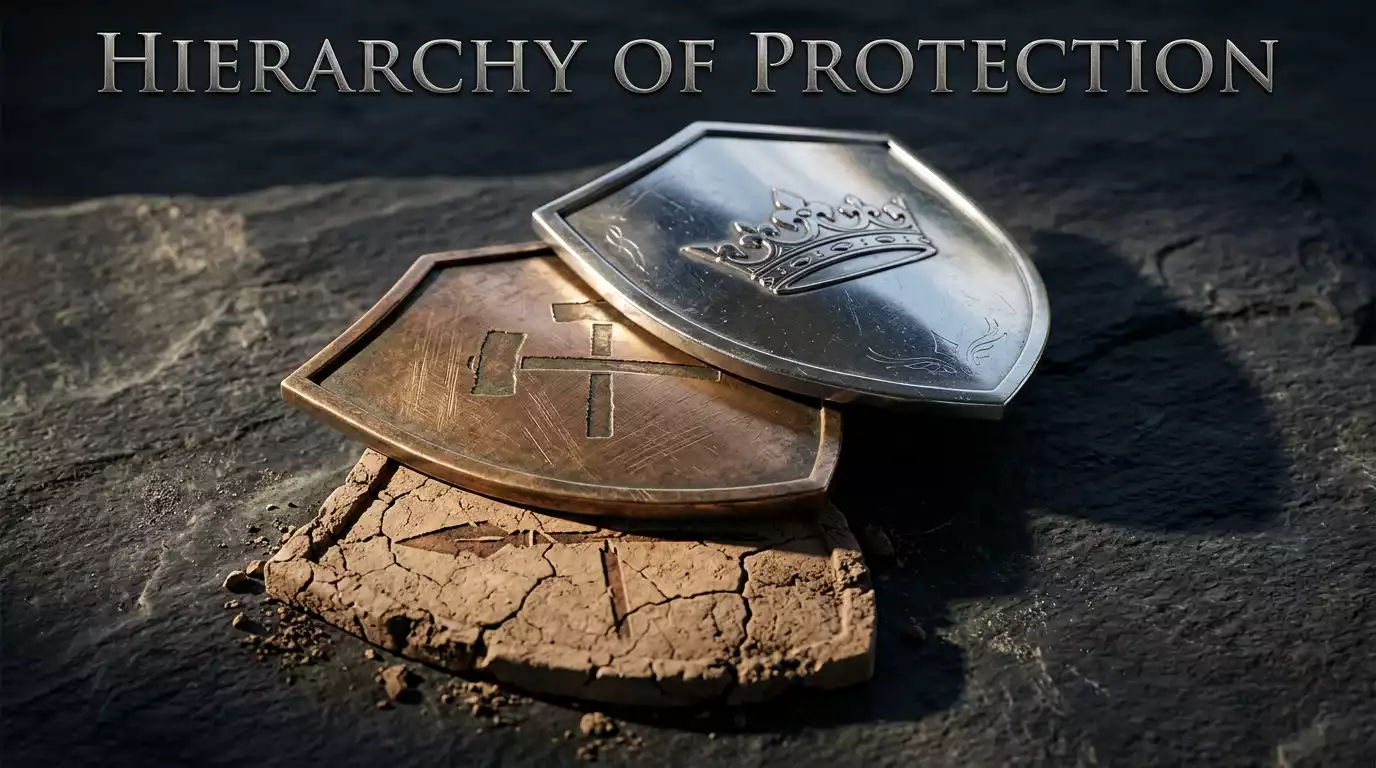
Three regulatory frameworks impose materially different player-safeguard obligations. The UKGC’s LCCP and Social Responsibility Code require ADR access, fund segregation, affordability assessments, GamStop integration, and stake limits. The MGA’s Player Protection Directive requires segregated funds, mandatory deposit-limit tools, and approved-ADR membership. The Curaçao LOK framework imposes a lighter touch. Those obligations are not abstract. They quantify the difference between a regime that fined operators a combined tens of millions of pounds in 2025 and a regime that, by most accounts, has never publicly revoked a licence for failing to pay a player. If you are considering depositing at Rouge Casino, or any offshore operator marketed to UK players, this comparison is the most important thing you will read today.
Jessica Langlille, a casino analyst who has spent years evaluating operator credentials, put it bluntly: the number one quality to look for in any gambling platform is the availability and standard of its licensing. I agree with her — and this article will show you exactly why.
The full assessment is in our Rouge Casino review.
The Curaçao Licensing Framework: Structure and Limitations
I have reviewed dozens of Curaçao-licensed operators over the past eight years, and the most consistent finding is how little the licence itself requires. Until 2023, the system operated under a master-sublicensee model: a handful of master licence holders would sell sublicences to operators, sometimes with minimal vetting. The operator paid a fee, received a seal, and was left largely to its own devices.
The 2023 reform established the Curaçao Gaming Authority (CGA) as a dedicated regulator, replacing the old model with direct licensing. On paper, this was a significant step. The CGA introduced KYC requirements, anti-money laundering obligations, and a framework for player complaints. In practice, the transition has been slow and the enforcement record remains thin. The CGA itself has publicly warned about operators falsely claiming its authorisation — a statement that reads, in part: “This website falsely presents itself as licensed by the CGA and unlawfully uses the logo and detail of CGA and its Digital Authorization Seal in order to mislead the public.” When the regulator is issuing warnings about operators faking its own seals, you know the system has structural problems.
Here is what a Curaçao licence typically does not guarantee. Player funds are not required to be held in segregated accounts, which means if the operator becomes insolvent, your balance may vanish with the company. There is no mandatory participation in an independent dispute resolution scheme. There is no requirement to contribute to responsible gambling programmes. And there is no publicly accessible register of enforcement actions — fines, suspensions, or licence revocations — that players can consult before depositing. Forty-three percent of fraudulent online casinos display fake licensing information, and the Curaçao system, with its historically loose oversight, has been a favoured target for operators who want a veneer of legitimacy without meaningful accountability.
This does not mean every Curaçao-licensed operator is dishonest. Some run legitimate businesses. But the licence itself provides almost no mechanism for a UK player to recover funds if something goes wrong. You are relying entirely on the operator’s goodwill, and as the complaint records for Rouge Casino suggest, goodwill is not always forthcoming.
There is another dimension to the Curaçao framework that rarely gets discussed in affiliate reviews: the absence of game fairness requirements comparable to those of the UKGC or MGA. Curaçao does not mandate independent RTP audits or require operators to use only certified Random Number Generators. Thirty-nine percent of unlicensed or loosely regulated casinos use manipulated games with RTP significantly lower than advertised — a statistic that should give any player pause. Under a UKGC licence, game software must be tested by approved testing houses, and operators face penalties for non-compliance. Under Curaçao, the testing requirements are less rigorous, less transparent, and less consistently enforced.
Inside the Curaçao framework: the 2023 LOK reform and what changed
Until 2023, Curaçao operated a Master Licence / Sub-Licence pyramid in which a handful of master licensees re-sold sub-licences to thousands of operators with minimal due diligence. The Landsverordening op de Kansspelen (LOK) framework, adopted in 2023 and phased in through 2024, replaced that pyramid with a direct-licensing regime under a new Curaçao Gaming Authority (CGA). On paper, the reform tightens beneficial-ownership disclosure, raises capital-adequacy thresholds, and introduces a dedicated complaint mechanism for player disputes.
In practice, the reform is incomplete in ways that matter to UK players. The CGA’s enforcement capacity is materially smaller than the UKGC’s — measured in published enforcement actions, public penalties imposed, and binding orders to repay players. Dispute timelines under the new complaint mechanism are not yet benchmarked against the UKGC’s eight-week statutory window. And the transition period has left a mixed pool of operators: some hold post-reform direct CGA licences, others still operate under pre-reform sub-licence numbers that the CGA has signalled it will phase out but has not yet revoked. Rouge Casino’s specific licence status under the post-2023 framework should be verifiable on the CGA registry, but disclosure of trading names is less comprehensive than the UKGC Public Register’s.
Spotting fake or recycled Curaçao licence numbers
Three patterns recur in publicly documented cases of fake or recycled Curaçao licence claims. First: a licence number quoted in a casino’s footer that, when checked against the CGA’s published registry, either does not exist or is attributed to a different operator. Second: a licence number that was valid for a defunct master-licence sub-licensee whose sub-licence rights have lapsed but whose number continues to be displayed on a new operator’s site. Third: a licence “issued by” an authority that is not the CGA — for example, claims of licensing by “Antillephone NV” (a historical master licensee whose authority to issue sub-licences has been constrained under the LOK transition).
Verification is a five-minute exercise: copy the licence number from the casino’s footer, search the CGA public registry, confirm both the number’s validity and the licensee name matches the operator running the site. If the registry returns no result, or returns a different operator name, the claim is at best stale and at worst fabricated. UKGC-licensed operators face an equivalent verification on the UKGC Public Register, but the cross-check is more reliable on the UK side because the UKGC registry includes all trading names per licence.
What the licence fails to prevent: the complaints record.
UKGC Licensing: What UK Players Normally Get
I remember the first time I walked a player through the UKGC complaint process. She had a genuine dispute — a withdrawal delayed for six weeks with no explanation. Within 28 days of escalating through the operator’s ADR provider, she had her money. That outcome is unremarkable at a UKGC-licensed site. It would be extraordinary at an offshore one.
The UK Gambling Commission regulates approximately 2,200 operators as of March 2025 (UKGC annual report 2024/25), a number that has declined year-on-year as the regulator tightens standards and smaller operators exit the market. That consolidation is deliberate. The UKGC’s approach can be summarised in three words its senior officials have repeated throughout 2025: compliance is not optional.
What does a UKGC licence require in practice? Start with fund protection. Operators must either segregate customer funds or hold them in a designated trust account, ensuring that if the company fails, player balances are protected. Every UKGC-licensed operator must participate in an approved Alternative Dispute Resolution (ADR) scheme — bodies like IBAS or eCOGRA — giving players an independent, free pathway to resolve disputes. If the ADR process fails, the UKGC itself can intervene, and has the statutory power to suspend or revoke licences, impose unlimited financial penalties, and refer cases for criminal prosecution.
By the end of 2026 the Commission’s enforcement record over the previous two years included 741 cease-and-desist notices and roughly 398,000 illegal URLs handed off for delisting. Those numbers reflect a regulator that actively polices its market, including the offshore operators who target UK players without authorisation. The enforcement extends beyond paperwork. Operators have faced multi-million-pound penalty packages for failures in customer interaction, anti-money laundering, and responsible gambling — and the details are published on the UKGC’s website for anyone to read.
There is also the responsible gambling infrastructure. Every UKGC operator must integrate with GamStop, the national self-exclusion scheme. They must display responsible gambling messaging, provide deposit limits, loss limits, and session time reminders. They must conduct financial risk assessments when a player’s net deposits hit certain thresholds. None of this is optional, and the penalties for non-compliance are severe enough that operators take it seriously. The system is not perfect — no regulatory framework is — but it represents a fundamentally different level of protection compared to what a Curaçao permit provides.
MGA: The Middle Ground Between Curaçao and UKGC
Whenever I explain gambling licences to someone new, I use a simple spectrum. On one end, the UKGC — heavy regulation, strong enforcement, high player protection. On the other end, Curaçao — light regulation, minimal enforcement, limited player recourse. The Malta Gaming Authority sits somewhere in between, and understanding where is useful context for evaluating Rouge Casino’s position.
The MGA’s regulatory framework sits between the UKGC’s and Curaçao’s in stringency. That gap reflects real differences in how the MGA operates. Malta requires operators to segregate player funds and maintain adequate reserves. It mandates participation in an ADR scheme. It conducts regular compliance audits and publishes enforcement actions, including licence suspensions and financial penalties. The MGA has, on multiple documented occasions, revoked licences from operators who failed to meet their obligations.
Where the MGA falls short compared to the UKGC is in scope and reach. The MGA’s responsible gambling requirements are less prescriptive — there is no equivalent of GamStop for Maltese-licensed operators, and affordability checks are not mandated at the same thresholds. The MGA also does not have jurisdiction over the UK market in the way the UKGC does, meaning a UK player who encounters problems at an MGA-licensed site has fewer domestic options for escalation. Still, an MGA licence signals a level of regulatory engagement that Curaçao simply does not match.
Why does this matter for Rouge Casino? Because some affiliate review sites have claimed that Rouge Casino holds an MGA licence. I have seen this claim on at least one UK-facing review site. It is not supported by the MGA’s own public register of licensed operators. Conflating a Curaçao permit with MGA authorisation is not a trivial error — it misrepresents the level of protection available to players, and it is exactly the kind of misinformation that makes independent verification essential.
Three Licences Side by Side: Enforcement, Disputes, Penalties
Numbers tell the story more clearly than any narrative. I have compiled the key regulatory metrics across all three licensing regimes, and the contrast is stark.
Consider player fund protection first. Under the UKGC, customer funds must be segregated or held in trust, with clear rules about what happens in insolvency. The MGA requires operators to maintain player funds in separate accounts with adequate liquidity. Curaçao’s framework, even after the 2023 reform, does not impose equivalent ring-fencing requirements. If a Curaçao-licensed operator runs out of money, there is no regulatory mechanism guaranteeing your balance will be returned.
Dispute resolution follows a similar pattern. The UKGC mandates free ADR through approved bodies, and publishes decisions. The MGA offers a Player Support Unit that mediates complaints before they reach ADR. Curaçao has introduced a complaint mechanism under the new CGA, but its track record is too short and too opaque to evaluate meaningfully. In my experience, players who file complaints against Curaçao-licensed operators rarely receive a substantive response from the regulator.
Enforcement is where the gap becomes a chasm. The UKGC published 741 cease-and-desist notices in a single reporting period and reported nearly 398,000 illegal URLs. It has the power to impose unlimited fines, and regularly exercises that power. The MGA issues financial penalties and has revoked licences, though on a smaller scale and with less public transparency than the UKGC. Curaçao’s public enforcement record is, to be diplomatic, sparse. I am not aware of a single publicly documented case in which the old licensing regime revoked a sublicence specifically because the operator refused to pay a player. The new CGA may change this, but as of mid-2026, the evidence is not there yet.
Then there is the responsible gambling dimension. UKGC operators must integrate with GamStop, enforce stake limits — five pounds per spin for over-25s since 9 April 2025, and two pounds per spin for 18-to-24-year-olds since 21 May 2025 — and conduct financial risk checks when deposits exceed certain thresholds. MGA operators have responsible gambling obligations, but they are less granular. Curaçao-licensed operators have no mandatory self-exclusion integration, no stake limits, and no affordability checks. For a UK player with a self-exclusion in place, gambling at a Curaçao-licensed site like Rouge Casino means that safety net simply does not exist.
One dimension that rarely features in casino reviews is what happens when a licence holder shuts down. Under the UKGC, there are clear procedures for winding down operations, including returning player funds. The MGA has similar, if less prescriptive, requirements. Under Curaçao, the process is opaque. I have seen operators disappear overnight — website offline, support emails bouncing, funds inaccessible — with no regulatory communication to affected players. The absence of a structured wind-down process is not a theoretical risk. In Q1 2025 alone, cybersecurity firms identified 782 malicious casino websites, many operating under Curaçao-style permits that vanished within months of launch.
The overall picture is one of divergence, not degree. These are not three variations on the same regulatory philosophy. They represent fundamentally different answers to the question of how much protection a player deserves.
Rouge Casino vs UKGC-licensed casinos: the practical comparison
The side-by-side comparison resolves into three operational axes that determine the practical experience of playing at a UKGC-licensed casino versus Rouge Casino.
Dispute resolution and self-exclusion. UKGC licensees must publish a complaint procedure with a statutory eight-week response window, and players whose complaints are not resolved can escalate to an approved Alternative Dispute Resolution provider — IBAS for casino disputes — whose decisions are binding on the operator. The UKGC itself acts as the enforcement backstop, with 741 cease-and-desist notices and 397,527 illegal-gambling-URL referrals to search engines in the most recent reporting period. Self-exclusion is centralised through GamStop, which blocks 600,000+ registered users from every UKGC-licensed site (with a record 10,281 sign-ups in April 2025 alone). Rouge Casino sits outside this entire architecture: no approved-ADR access, no UKGC enforcement, no GamStop integration.
Tax and levy obligations. UKGC-licensed operators pay Remote Gaming Duty on their gross gaming yield — rising from 21% to 40% from 1 April 2026 — plus the statutory gambling levy of 1.1% of GGY that took effect for online operators in April 2025. The levy funds research, prevention, and treatment of gambling-related harm through GambleAware, GamCare, and NHS clinics. Rouge Casino pays neither: its Curaçao tax structure is lighter, and it does not contribute to UK harm-reduction funding. For a UK player, this matters because the support infrastructure their losses would have funded at a UKGC-licensed site is absent when those losses occur offshore.
Bonus structures and wagering. The Rouge Casino welcome offer — 400% match up to £2,000 with 50× wagering — sits well above the UKGC-market norm of 100–200% match at 30–40× wagering. The headline generosity disguises the higher clearance burden. The detailed bonus mathematics are covered on the Rouge Casino bonus page.
Rouge Casino’s Licence Claims: Verified vs Stated
Every time I review a casino, I start the same way: I check the licence claim against the regulator’s public register. It takes five minutes. The fact that most affiliate reviewers skip this step is baffling to me.
Rouge Casino states it holds a Curaçao licence. This is broadly consistent with the information available from independent review platforms, including Casino.guru, which has assigned Rouge Casino a Safety Index of 1.7 out of 10 — a score that places it firmly in the “very low safety” category. The licence number displayed on Rouge Casino’s website should correspond to an entry in the Curaçao Gaming Authority’s public register. Players can verify this directly by visiting the CGA’s website and searching for the operator. If the number does not appear, or if the details do not match, that is a significant red flag.
What concerned me more during my review was the inconsistency across third-party sources. At least one UK-facing affiliate site claims Rouge Casino holds an MGA licence — a claim that contradicts every other source I have examined. The MGA maintains a transparent, searchable public register. I checked it. Rouge Casino does not appear. This kind of misinformation is not harmless. A player who believes they are protected by MGA oversight — with its fund segregation, ADR access, and enforcement history — is making a fundamentally different risk calculation than one who understands they are dealing with a Curaçao permit.
The broader pattern is worth noting. Forty-three percent of fraudulent online casinos display fake licensing information, according to the 2025 Digital Gambling Compliance Report. I am not suggesting Rouge Casino is using a fabricated licence number — the evidence does not support that claim. But the ecosystem around it, the affiliate sites promoting it with inaccurate regulatory information, creates a fog of misinformation that makes informed decision-making harder for players. And that fog is not accidental. It serves the interests of operators and affiliates who benefit from players depositing without fully understanding the regulatory environment they are entering.
If you want to verify any casino’s licensing claims yourself, the Curaçao licensing framework is explained in detail in our dedicated guide, including how the 2023 reform changed the verification process.
What This Means for Your Money and Your Rights
Let me be direct about what this licensing analysis means in practical terms, because I have seen too many players learn these lessons the hard way.
If you deposit at Rouge Casino and the operator refuses to process your withdrawal, your options are limited to contacting the operator directly and, potentially, filing a complaint with the Curaçao Gaming Authority. There is no IBAS, no eCOGRA, no independent arbiter with a track record of resolving player disputes. The UKGC has no jurisdiction over Rouge Casino and cannot compel it to pay you. UK courts may theoretically be available, but pursuing a case against an offshore entity domiciled in Curaçao is expensive, time-consuming, and offers no guarantee of enforcement even if you win.
Approximately 1.4 million British adults — 2.7% of the adult population per the Gambling Survey for Great Britain Year 2 (published October 2025) — experience problem gambling. For those individuals, the responsible gambling tools mandated by UKGC licensing are not abstract requirements. They are lifelines. Deposit limits, loss limits, reality checks, self-exclusion through GamStop — these mechanisms exist because decades of evidence show that some players need structural safeguards to manage their gambling. At an offshore casino operating under a Curaçao licence, those safeguards are absent unless the operator voluntarily implements them. Rouge Casino is not part of GamStop. It does not enforce UK stake limits. It does not conduct the affordability checks that UKGC operators are required to perform.
Helen Rhodes, Director of Major Policy Projects at the UKGC, has described the Commission’s approach as aiming to give players “greater awareness and control over their gambling activities.” That objective depends entirely on the regulatory framework. Outside UKGC jurisdiction, the awareness and control that Rhodes describes are replaced by whatever the operator decides to offer — and at offshore sites targeting self-excluded UK players, the incentive structure does not favour player protection.
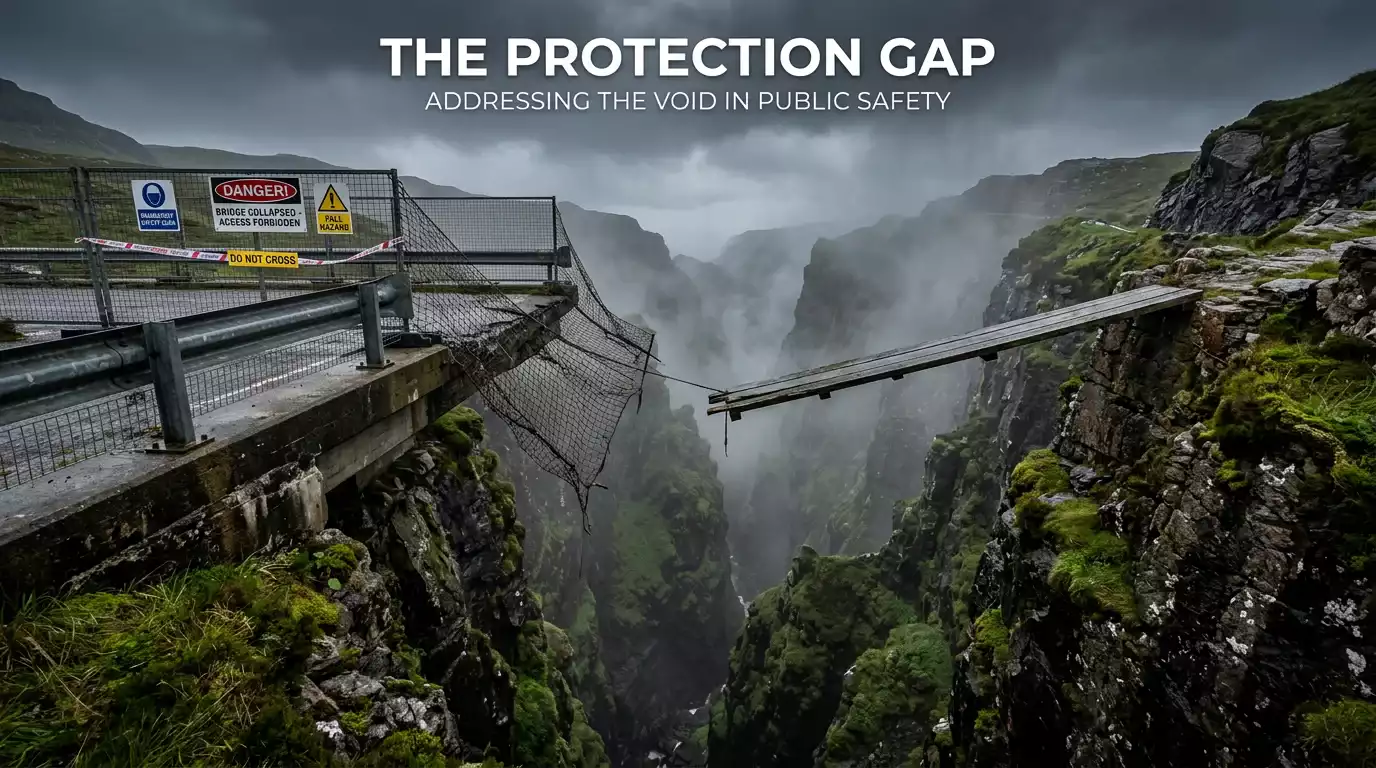
The bottom line is not complicated. A Curaçao licence and a UKGC licence are not two versions of the same thing. They represent fundamentally different levels of player protection, accountability, and recourse. The protection index scores — 9.2 for UKGC, 5.4 for Curaçao — capture that difference in a single metric, but the real-world consequences play out in withheld withdrawals, locked accounts, and disputes that go unresolved because no regulator with meaningful enforcement power is watching.
Frequently Asked Questions
Can a Curaçao-licensed casino legally accept UK players?
From the operator’s side, a Curaçao licence does not authorise gambling services to UK residents — the UKGC is the only body that can grant that permission. The UKGC has consistently stated that any operator targeting UK consumers without a UKGC licence is acting illegally. From the player’s side, there is currently no UK law that criminalises an individual for gambling at an unlicensed offshore site, but the player forfeits all UKGC protections, including access to ADR, fund segregation, and GamStop self-exclusion.
What recourse do players have if a Curaçao-licensed casino withholds funds?
Options are limited. You can file a complaint directly with the operator and, under the post-2023 framework, submit a complaint to the Curaçao Gaming Authority. However, the CGA’s complaint resolution track record is too new to evaluate reliably. Beyond that, civil litigation in the operator’s jurisdiction is theoretically possible but practically difficult and expensive for most individual players. The UKGC cannot intervene, and UK-based ADR bodies have no jurisdiction over Curaçao-licensed operators.
Has the Curaçao Gaming Authority ever revoked a licence for player complaints?
Under the old master-sublicensee system, there is no publicly documented case of a licence revocation specifically triggered by player complaints about withheld payouts. The new CGA, established in 2023, has issued warnings about operators falsely claiming its authorisation, but comprehensive enforcement data — including revocation statistics — is not yet publicly available in the way that UKGC or MGA enforcement records are.
Why do some review sites claim Rouge Casino has an MGA licence?
This appears to be either an error or deliberate misinformation. The Malta Gaming Authority maintains a searchable public register of all licensed operators, and Rouge Casino does not appear on it. Some affiliate review sites may conflate different licensing regimes, whether through carelessness or because an MGA claim makes the casino appear safer and more likely to attract deposits through their referral links. Always verify licence claims directly with the relevant regulator’s public register.